School of Medicine
At a Glance
#1
17
10
Delivering a World-Class Education
At UMKC's School of Medicine, you'll receive a world-class education from leaders in the medical profession and gain real-world experience at our affiliate institutions in the heart of Kansas City and surrounding areas.

About our school
The UMKC School of Medicine serves Kansas City and the surrounding urban and rural communities by providing exemplary healthcare services and outstanding training for the next generation of medical professionals. Learn more about our storied institution.
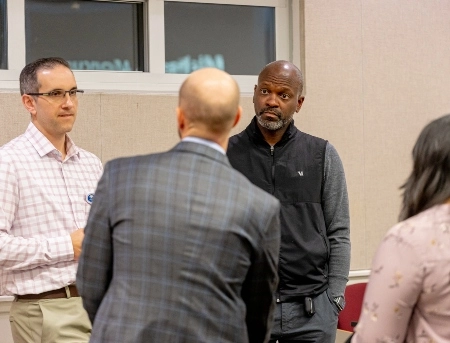
Departments
Our departments are the strength of our school. Explore the clinical, academic and administrative units behind the UMKC School of Medicine and learn more about their unique contributions and graduate medical education programs.

Current students
We offer a wide variety of resources and programs to help our students succeed. Learn more about the resources, tools and support services available to you.
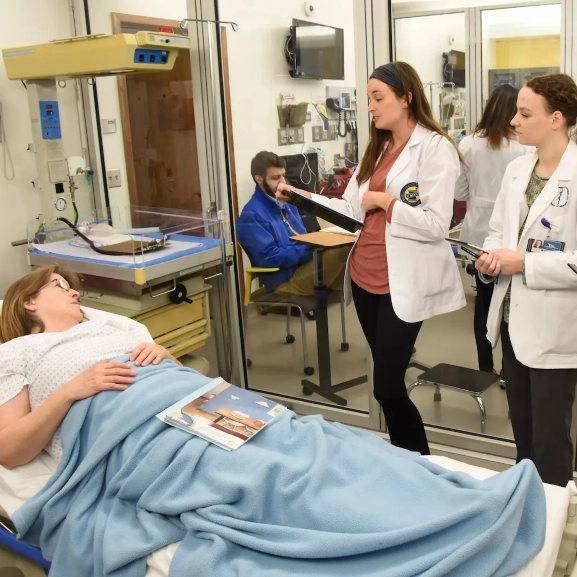
In-Demand Medical Programs
Explore our nationally respected medical degree, certificate, certification and graduate medical education programs, which are turning out talented medical professionals who are uniquely prepared to meet the diverse needs of today's healthcare landscape.
Experience the UMKC Difference
Our unique approach to medical education has helped us train outstanding physicians for more than 50 years. Learn more about what makes us different and why our graduates are consistently regarded as well-prepared coming out of school.
School of Medicine News

UMKC School of Medicine Honors Ophthalmology Leader Nelson Sabates with Take Wing Award
1 May 2026 | Recognized for decades of excellence in academic medicine, research leadership and service to University Health and Kansas City, Sabates will receive top alumni award Read full story UMKC School of Medicine Honors Ophthalmology Leader Nelson Sabates with Take Wing Award

UMKC Researchers Partner with Kansas City Churches in $4 Million National Institutes of Health Study to Prevent Diabetes
20 Apr 2026 | The five-year study addresses food insecurity and physical activity through church-based diabetes prevention programs Read full story UMKC Researchers Partner with Kansas City Churches in $4 Million National Institutes of Health Study to Prevent Diabetes

UMKC Launches Research and Innovation Excellence Awards
20 Apr 2026 | Inaugural event honors faculty impact across all disciplines Read full story UMKC Launches Research and Innovation Excellence Awards